Article Content
Introduction
Generative AI is no longer just a technology experiment—it's becoming a fundamental enterprise resource, as essential as ERP systems or cloud infrastructure. In 2026, companies are restructuring entire operations around GenAI capabilities, treating it as a strategic asset that permeates every business function.
GenAI as the New ERP Layer
Beyond Automation Tools: Traditional enterprise software automated defined processes. GenAI goes further—it reasons, creates, and adapts. It's becoming the intelligence layer sitting above traditional systems, coordinating workflows, generating insights, and making decisions that previously required human judgment.
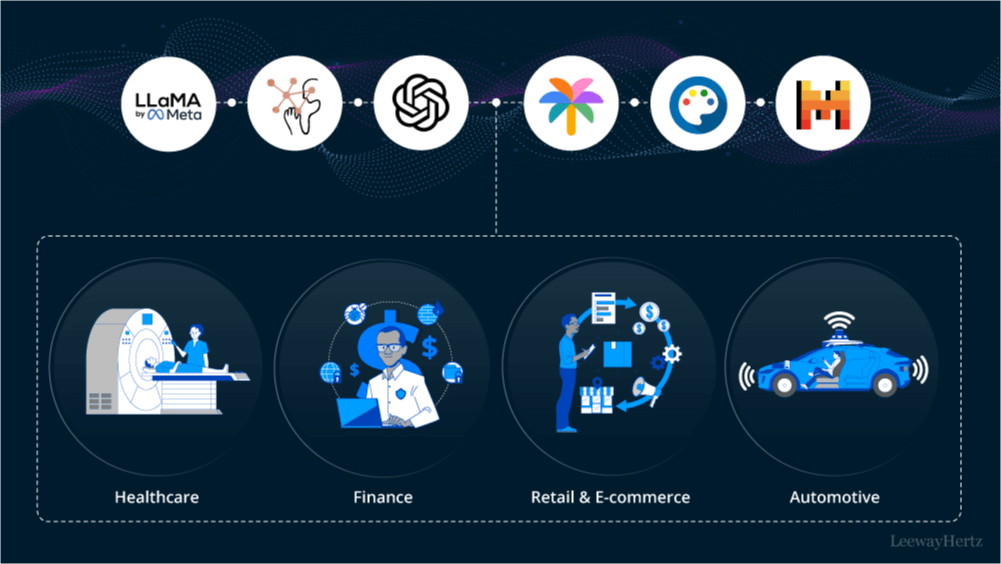
Enterprise-Wide Integration: GenAI is embedding into every function. Sales teams use it for proposals. Finance leverages it for forecasting. HR employs it for recruitment. Operations optimize with it. Legal uses it for contract analysis. This isn't departmental software—it's organizational infrastructure.
Decision Intelligence: GenAI doesn't just automate tasks—it augments decision-making. Executives query business data conversationally. Managers get scenario analyses instantly. Teams access institutional knowledge through natural language.
How Enterprises Are Restructuring Around GenAI
New Organizational Roles: Companies are creating positions that didn't exist two years ago—Chief AI Officer overseeing strategy, AI Ethics Officer ensuring responsible use, Prompt Engineering teams, AI Operations specialists, and Change Management leads.
Process Redesign: Business processes are being reimagined with GenAI at the center. Customer service routes through AI first. Content creation starts with AI drafts. Research begins with AI literature reviews. Processes become human-AI collaborations.
Skill Transformation: Every role is evolving. Marketing professionals learn prompt engineering. Analysts master AI-assisted exploration. Developers adopt AI pair programming. The workforce isn't being replaced—it's being augmented.
ROI and Strategic Advantage
Measurable Business Impact: Early adopters report dramatic results—40-60% productivity gains in knowledge work, 30-50% faster time-to-market, 20-40% cost reduction in customer service, and improved decision quality.
Competitive Differentiation: GenAI creates competitive moats. Companies with superior AI capabilities serve customers better, innovate faster, and operate more efficiently. The gap between AI leaders and laggards widens monthly.
Risks and Governance Challenges
Quality and Hallucination Risk: GenAI generates plausible but incorrect outputs. Governance requires validation systems, human oversight for critical outputs, and clear accountability when AI fails.
Data Privacy and Security: GenAI systems access vast company data. Risks include sensitive data exposure, training data leaks, and compliance violations. Governance frameworks must address these systematically.
Bias and Fairness: AI trained on historical data perpetuates biases. Enterprises need bias testing and mitigation, diverse training data, and fairness monitoring.
Regulatory Compliance: AI regulations are emerging globally—EU AI Act, sector-specific rules. Enterprises must classify AI systems by risk, document development, ensure transparency, and maintain audit trails.
How EdJAMON Prepares GenAI Enterprise Professionals
Business Transformation Strategy: Students learn to assess organizational readiness, identify high-impact use cases, design implementation roadmaps, calculate ROI projections, and measure success with appropriate metrics.
Enterprise Integration Projects: Real projects integrate GenAI into simulated business environments—connecting to CRM and ERP systems, implementing security controls, designing user experiences, building monitoring, and managing change across departments.
ROI Analysis and Business Case Development: Training in quantifying GenAI benefits—measuring productivity improvements, calculating cost savings, projecting revenue impacts, and presenting business cases to executives.
Governance Framework Implementation: Students design and implement AI governance—defining acceptable use policies, implementing review workflows, creating risk assessment processes, and ensuring regulatory compliance.
Change Management Training: Students learn stakeholder engagement, communication strategies, training program development, measuring adoption rates, and addressing resistance.
Risk Management: Identifying and mitigating GenAI risks—implementing quality checks, protecting data privacy, detecting bias, planning for vendor failures, and managing compliance risks.
Conclusion
Generative AI is becoming enterprise infrastructure—as fundamental as databases or cloud platforms. Companies that successfully integrate GenAI gain dramatic competitive advantages. EdJAMON prepares professionals to lead this transformation through comprehensive training in technology, business strategy, governance, and change management.
Topics & Tags
GenerativeAIEnterpriseAIAITransformationAIBusinessStrategyAIIntegrationAIGovernanceAIOperationsDecisionIntelligenceAIROIDigitalTransformationAIChangeManagementResponsibleAIAIProductivityFutureOfWork

