Article Content
Introduction
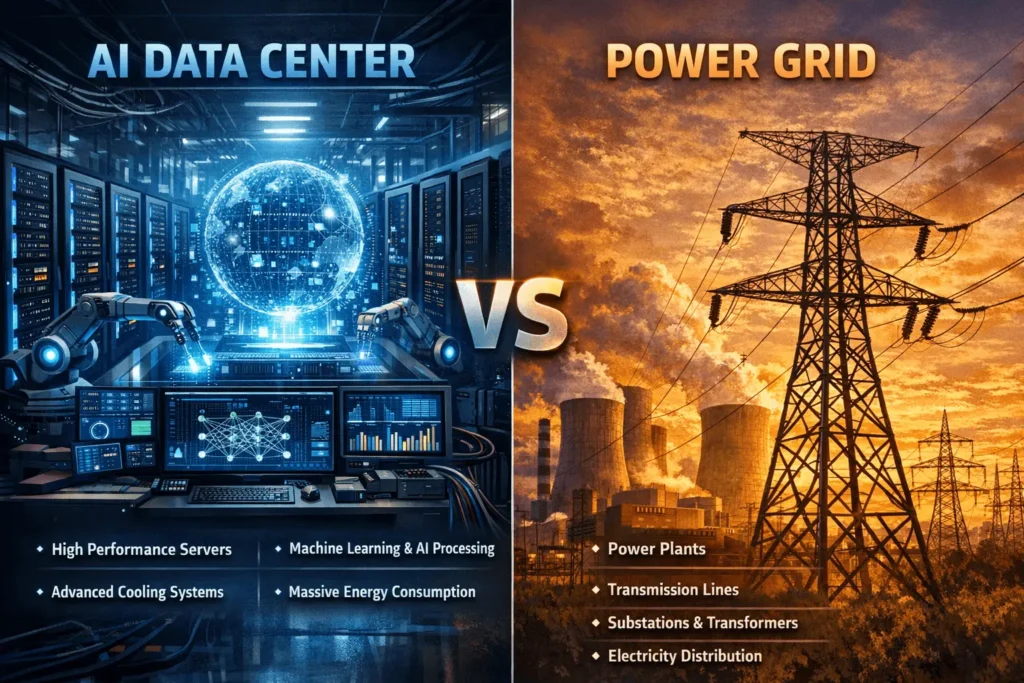
AI's explosive growth has collided with physical reality: power constraints. In 2026, data centers struggle to secure enough electricity for AI workloads. This energy crisis is forcing a fundamental rethinking of AI infrastructure, creating demand for professionals who understand both AI technology and energy efficiency.
The Power Crisis
Unprecedented Energy Demand: Modern AI data centers consume 50-100 megawatts—equivalent to 50,000 homes. Global AI computing demand is growing 50%+ annually while power supply grows 2-3%.
Grid Capacity Constraints: Power grids weren't designed for concentrated AI loads. Substations lack capacity, transmission lines hit limits, and building new capacity takes years.
Cost Escalation: Power costs are rising dramatically. Data center operators pay premiums for reliable power and sometimes build dedicated power plants.
Environmental Impact: AI's carbon footprint concerns regulators and public. Training large models emits tons of CO2. Pressure mounts for sustainable AI.
Why Power Matters for AI Professionals
Infrastructure Selection: Power availability determines where you can deploy AI. Understanding power constraints shapes architecture decisions.
Cost Management: Power often exceeds computing costs. Energy efficiency determines profitability.
Sustainability Requirements: Companies face pressure for green AI. Energy efficiency becomes competitive advantage.
Addressing the Power Challenge
Energy-Efficient Models: Developing models optimizing for performance per watt, using smaller architectures, leveraging quantization and pruning, and designing with energy constraints in mind.
Hardware Innovation: New chips minimize power—specialized AI accelerators, custom silicon, and neuromorphic chips mimicking brain efficiency.
Workload Optimization: Running AI efficiently through batch processing, scheduling during off-peak power, using spot instances, and caching results.
Renewable Energy Integration: Data centers using solar and wind power, energy storage, renewable credits, and carbon-neutral operations.
How EdJAMON Trains Energy-Aware AI Professionals
Energy Efficiency Fundamentals: Students learn how AI consumes power—GPU characteristics, memory and networking energy, cooling requirements, and total facility power.
Measuring AI Energy Consumption: Hands-on experience profiling workload energy, calculating power usage effectiveness (PUE), tracking carbon emissions, and benchmarking efficiency using tools like CodeCarbon.
Model Optimization for Efficiency: Training in quantization, pruning, distillation, architecture search, and evaluating accuracy-energy tradeoffs.
Efficient Training Strategies: Projects implement mixed-precision training, gradient checkpointing, efficient data loading, distributed training, and early stopping.
Efficient Inference Deployment: Optimizing production systems—batching requests, caching results, using appropriate hardware, implementing model cascades, and load balancing.
Power-Constrained Design: Students design systems within power budgets—calculating requirements, selecting model sizes, planning for limits, and balancing performance with constraints.
Real-World Projects: Students deploy AI within data center power budgets, optimize systems reducing energy 40%, choose models for power-constrained devices, and design training schedules minimizing carbon impact.
Conclusion
Power constraints are the defining challenge for AI infrastructure. The future belongs to professionals who can deploy AI efficiently—achieving results within power and energy budgets. EdJAMON ensures graduates understand energy constraints and can design sustainable systems.
Topics & Tags
AIEnergyAIDataCentersGreenAIAIEfficiencySustainableAIPowerAwareComputingAIInfrastructureCarbonAwareAIEfficientMLModelOptimizationQuantizationPruningAIatScaleCloudSustainability
