Article Content
Introduction
The AI landscape is experiencing a fundamental shift. In 2026, enterprises are moving away from building proprietary AI models and focusing instead on adopting and integrating existing AI technologies. Competitive advantage comes not from having the best model, but from deploying AI effectively across the organization.
Why Enterprises Are Shifting Focus
Model Commoditization: Foundation models from OpenAI, Anthropic, Google, and open-source alternatives have become so powerful that building custom models from scratch rarely makes business sense. The performance gap between custom and foundation models has narrowed while the cost gap has widened dramatically.
Implementation Complexity: The real challenge isn't having a good model—it's integrating AI into existing workflows, connecting to legacy systems, ensuring data quality, and managing change. These implementation challenges dwarf model training in complexity.
Cost-Benefit Reality: Training large models costs millions. Most enterprises realize they'll never outperform well-funded AI labs. The ROI from perfect models deployed nowhere pales compared to good-enough models deployed everywhere.
Time to Value: Building models takes months or years. Adopting existing models delivers value in weeks. Speed matters more than perfection in competitive markets.
The Enterprise AI Adoption Stack
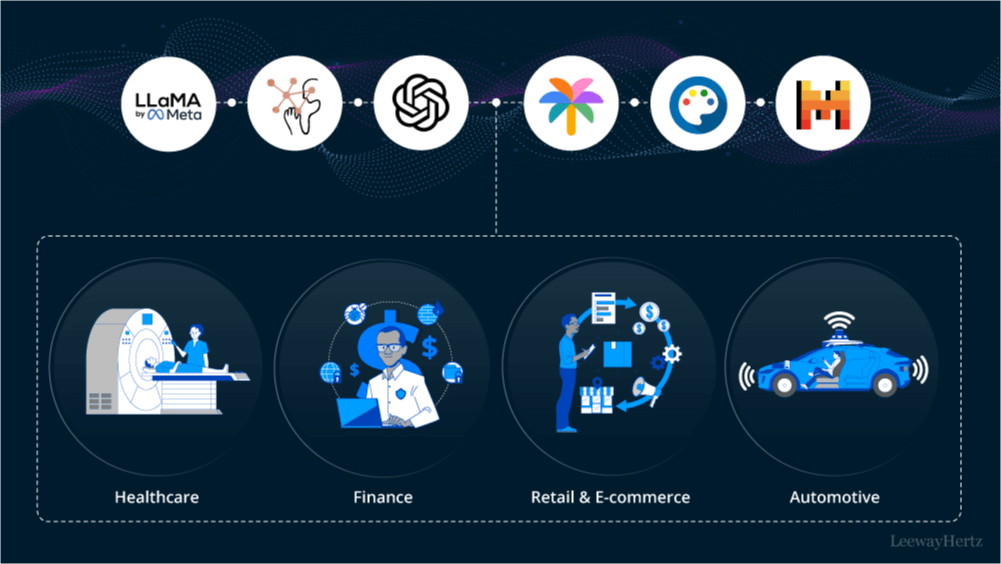
Foundation Model Selection: Enterprises choose among proprietary APIs (GPT-4, Claude, Gemini), open-source models (Llama, Mistral), or specialized models based on performance, cost, privacy requirements, and vendor reliability.
Integration Layer: Connecting AI to existing systems through APIs, data pipelines, authentication, error handling, and monitoring. Integration determines success more than model choice.
User Experience: Designing interfaces where employees actually use AI—chat interfaces, embedded suggestions, automation, and decision support. Poor UX kills adoption.
Change Management: Getting organizations to actually use AI through training, demonstrating value, addressing resistance, and measuring adoption.
Key Enterprise Adoption Challenges
Legacy System Integration: Connecting modern AI to decades-old infrastructure requires technical creativity and patience with constraints.
Data Quality Issues: Enterprise data is often incomplete, inconsistent, siloed, in incompatible formats, and lacking documentation. Data preparation consumes 60-80% of implementation time.
Cultural Resistance: Employees fear replacement, resist change, distrust AI, and lack skills. Technology is easy; people are hard.
How EdJAMON Trains Enterprise AI Adoption Specialists
Practical Implementation Focus: Students focus on real adoption challenges—evaluating and selecting models, integrating with enterprise systems, designing user experiences, managing change, and measuring business impact.
Enterprise Integration Projects: Students work on realistic scenarios like integrating AI into a legacy CRM system—assessing infrastructure, selecting vendors, building APIs, implementing security, creating interfaces, handling errors, and measuring impact.
Change Management Training: Students learn stakeholder communication, training program development, measuring adoption rates, addressing resistance, and demonstrating ROI.
Data Pipeline Development: Hands-on experience extracting data from legacy systems, cleaning messy data, implementing quality checks, and maintaining freshness.
Vendor Evaluation: Training on comparing vendors objectively—benchmarking performance, analyzing costs, evaluating stability, and assessing security.
ROI Analysis: Students learn to define success metrics, implement tracking, calculate productivity gains, conduct A/B tests, and report results.
Conclusion
The future of enterprise AI is about adoption, not model development. EdJAMON prepares graduates for this reality through hands-on implementation projects, real enterprise scenarios, and comprehensive training in the full adoption stack.
Topics & Tags
EnterpriseAIAIAdoptionAIDigitalTransformationFoundationModelsAIIntegrationAIImplementationLegacySystemModernizationDataPipelinesAIChangeManagementAIROIAIVendorSelectionAppliedAIAIforBusiness