Article Content
Introduction
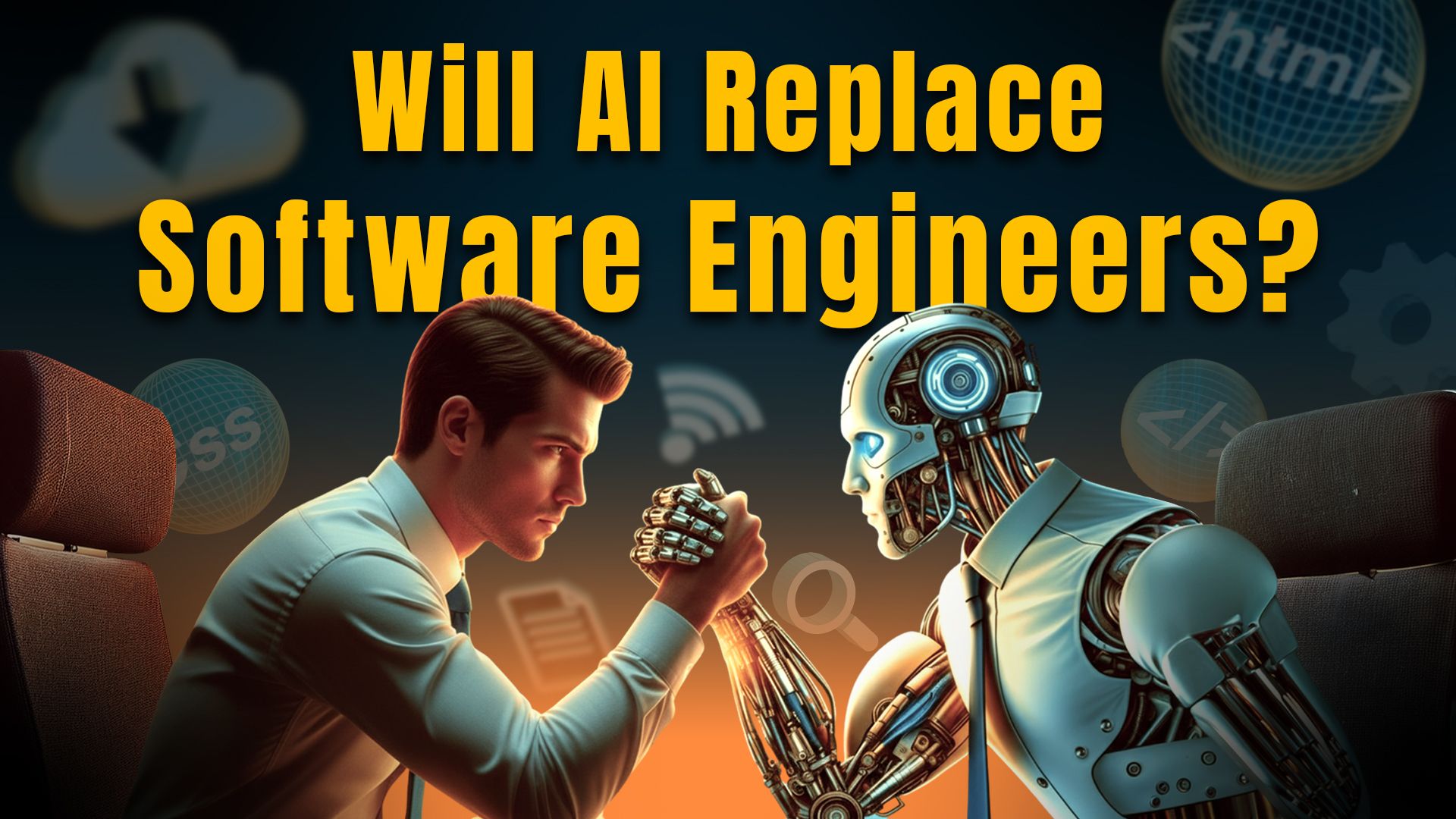
"Will AI take my job?" It's the question every software engineer has asked since ChatGPT exploded onto the scene. Tech forums overflow with anxious debates. LinkedIn posts alternate between doom-mongering and dismissive optimism. But what's the truth?.AI is transforming software engineering—not eliminating it. The real question isn't whether AI will replace engineers, but how engineers will evolve alongside AI.
What AI Can Do Well
AI demonstrates impressive capabilities in specific areas: Generates boilerplate code and standard functions instantly. Converts simple requirements into working code. Debugs obvious errors and syntax issues. Suggests code improvements and optimizations. Creates basic CRUD applications. Writes unit tests for simple functions. Formats code according to style guides. Generates documentation from code comments.
What AI Still Struggles With
Despite impressive capabilities, AI has clear limitations: Complex system architecture decisions requiring tradeoff analysis. Business logic demanding deep domain expertise. Understanding ambiguous or contradictory requirements. Debugging subtle, context-dependent issues. Security-critical implementations where mistakes have serious consequences. Performance optimization in complex distributed systems. Making strategic technical decisions with long-term implications. Navigating organizational politics and technical debt decisions.
Why AI Won't Replace Software Engineers
Context Is King: AI lacks organizational, business, and historical context that engineers accumulate. It doesn't understand why certain architecture was chosen, what political considerations influenced decisions, or what hidden constraints exist in legacy systems.
Judgment and Creativity: Engineering involves thousands of micro-decisions. Should we optimize for speed or maintainability? Is this technical debt acceptable? What's the right abstraction level? These require human judgment informed by experience.
Communication and Collaboration: Software development is team sport. Requirements gathering, stakeholder management, code reviews, and mentoring require human emotional intelligence and nuanced communication that AI cannot replicate.
Accountability and Ethics: When systems fail, someone must be accountable. When ethical dilemmas arise, human values must guide decisions. AI can't bear responsibility or navigate moral complexity.
How EdJAMON Training Platform Prepares Engineers for AI-Augmented Development
EdJAMON trains developers to lead with AI, not fear it.
AI Collaboration Skills: Students learn to work with AI as a junior partner. A project example involves building a financial application where students use AI for routine coding tasks while personally handling security-critical authentication logic and complex business rules.
Critical Evaluation Training: Developing judgment to assess and improve AI-generated code. Students review AI suggestions during live sessions, identifying security vulnerabilities like SQL injection risks, performance issues like N+1 queries, and logic errors in edge cases.
Strategic Thinking Focus: Emphasis on architecture, design patterns, and system thinking. Projects require students to make architectural decisions about microservices versus monoliths, database selection, caching strategies, and scalability approaches—decisions AI cannot make.
Domain Expertise Building: Deep knowledge in specialized areas where AI needs human guidance. Students choose specializations like healthcare systems, financial technology, or e-commerce platforms, developing expertise that makes them indispensable.
Soft Skills Development: Strengthening communication, leadership, and teamwork. Training includes presenting technical decisions to non-technical stakeholders, mentoring junior developers, and facilitating team discussions about technical direction.
Skills That Become More Valuable
System design and architecture expertise. Domain knowledge and business understanding. Team leadership and mentoring abilities. Product thinking and user empathy. Security and compliance knowledge. Cross-functional communication skills. Strategic technical decision-making capabilities.
Real Data: Industry Trends
Industry statistics paint a different picture than fear-mongering headlines. Sixty-five percent of companies plan to increase developer headcount in 2026. AI Engineer roles have grown three hundred fifty percent since 2023. Senior and Principal Engineer positions are in record demand. Average developer salaries increased eight percent year-over-year. The skills gap is widening, not closing, as demand for qualified developers outpaces supply.
Who Is at Risk?
Not all developer roles are equally secure. Higher risk developers include: Those refusing to learn AI tools. Engineers relying solely on coding without understanding design principles. Professionals resistant to continuous learning. Developers with only junior-level skills despite years of experience.Lower risk developers include: Those embracing AI as a tool. Engineers with strong system design skills. Professionals with deep domain expertise. Developers with excellent communication abilities. Those who continuously upskill and adapt.
Conclusion
AI won't replace software engineers—it will redefine what software engineering means. The developers who thrive won't be those who compete with AI, but those who collaborate with it. With EdJAMON's forward-thinking training, you'll develop the skills, mindset, and expertise that make you not just employable, but essential in the AI-augmented future of software development.
Topics & Tags
AIandJobsSoftwareEngineeringFutureOfWorkAIDevelopersAIinTechAIProductivitySystemDesignTechCareersAIUpskilling