Article Content
Introduction
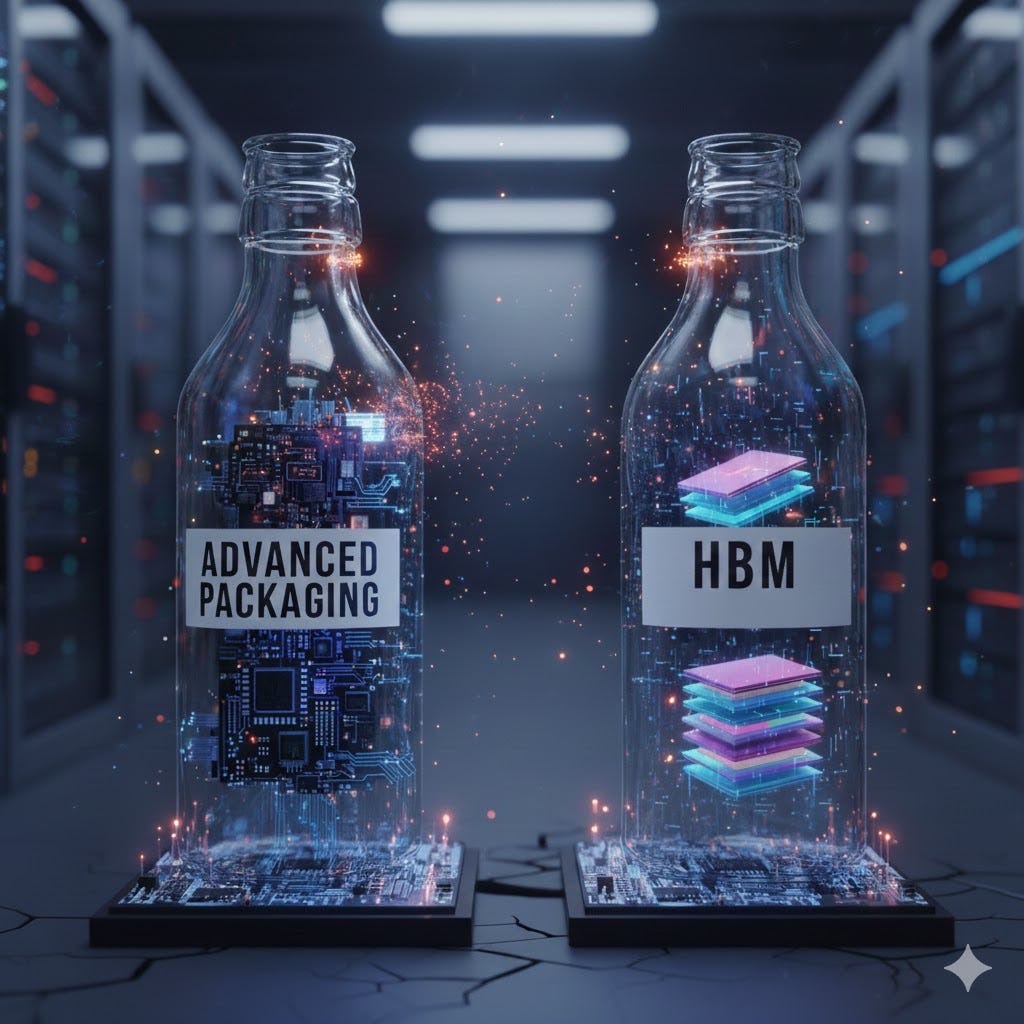
In 2026, AI faces an unexpected bottleneck: not chip design or fabrication, but advanced memory packaging. High Bandwidth Memory 4 (HBM4) has become essential for AI accelerators, providing the enormous memory bandwidth GPUs need. But HBM4 production is incredibly complex, requiring specialized packaging facilities. Demand far exceeds supply. AI chip makers have silicon wafers but can't package them with enough HBM4. This packaging bottleneck constrains the entire AI industry.
What Is HBM4 and Why It Matters
High Bandwidth Memory Explained: HBM4 represents cutting-edge memory technology. Unlike traditional memory sitting separately on circuit boards, HBM stacks memory dies vertically directly on the processor using advanced 3D packaging. This delivers dramatically higher bandwidth—several terabytes per second versus hundreds of gigabytes for conventional memory.
Why AI Needs HBM: AI models process massive datasets. GPUs compute trillions of operations per second, but they're often waiting for data from memory. HBM's extreme bandwidth keeps GPUs fed with data, enabling full utilization. Without HBM, expensive AI accelerators sit idle.
HBM4 Advancement: Each HBM generation increases capacity and bandwidth. HBM4 doubles bandwidth versus HBM3, enables larger memory capacities, reduces power consumption per bit, and supports next-generation AI accelerators.
The Packaging Bottleneck
Why Packaging Is Hard: Creating HBM4 requires extraordinary precision—stacking 12+ memory dies vertically with micrometer accuracy, connecting layers with microscopic through-silicon vias (TSVs), bonding HBM stacks to processors, ensuring thermal management, and testing complex 3D structures. Few facilities can do this reliably at volume.
Limited Production Capacity: Only a handful of companies—SK Hynix, Samsung, Micron—produce HBM4. Their packaging facilities represent billions in capital investment. Building new capacity takes 2-3 years. Current capacity can't meet explosive AI demand.
Supply-Demand Imbalance: AI accelerator demand grows 50%+ annually. HBM4 production capacity grows 20-30% annually. The gap widens. GPU makers like NVIDIA have chip designs ready but can't get enough HBM4.
Industry-Wide Impact
AI Deployment Delays: Organizations planning AI infrastructure face delays. GPU availability becomes unpredictable. Procurement cycles extend from months to quarters or years. Strategic initiatives wait for hardware.
Cost Inflation: Scarce HBM4 commands premium pricing. Memory costs that were 30-40% of chip cost rise to 50-60%+. AI infrastructure becomes more expensive. Some projects become uneconomical.
Strategic Stockpiling: Companies with capital pre-purchase HBM4 capacity years ahead, locking in supply. Smaller players face allocation challenges. Market concentration increases.
Solutions and Responses
Capacity Expansion: Memory manufacturers invest billions in new packaging facilities. SK Hynix announced massive factory expansions. But new capacity takes years to come online.
Alternative Architectures: Chip designers explore HBM alternatives—chiplet designs distributing memory differently, new memory technologies bypassing packaging constraints, and compute-in-memory reducing data movement.
Efficiency Improvements: Optimizing AI to need less memory bandwidth—model compression reducing parameter counts, quantization using lower precision, and memory-efficient architectures.
How EdJAMON Trains Semiconductor Supply Chain Specialists
Semiconductor Industry Fundamentals: Students learn the complete chip production process—design and architecture, wafer fabrication, advanced packaging technologies, testing and validation, and supply chain management.
HBM and Advanced Packaging: Detailed training on memory technologies—HBM architecture and evolution, 3D packaging techniques, through-silicon via (TSV) technology, and thermal management.
Supply Chain Analysis: Understanding semiconductor logistics—capacity planning and forecasting, lead time management, supplier relationship strategies, and risk mitigation approaches.
Strategic Procurement: Training in securing critical components—negotiating long-term supply agreements, evaluating make-versus-buy decisions, managing supplier dependencies, and qualifying alternative sources.
Market Analysis Projects: Real exercises analyzing semiconductor markets—forecasting HBM4 supply and demand, identifying bottlenecks, evaluating pricing trends, and advising on procurement strategy.
Risk Management: Identifying and mitigating supply chain risks—modeling shortage scenarios, developing contingency plans, diversifying supply base, and maintaining strategic inventory.
Conclusion
The HBM4 memory shortage illustrates how advanced technology depends on complex global supply chains. A bottleneck in one specialized manufacturing process constrains entire industries. EdJAMON prepares professionals to navigate these challenges through comprehensive training in semiconductor technology and supply chain management.
Topics & Tags
HBM4AIHardwareSemiconductorIndustryAdvancedPackagingAIAcceleratorsGPUInfrastructureChipSupplyChainHighBandwidthMemory3DPackagingTSVTechnologyAIComputeHardwareBottleneckAICostTrendsTechManufacturing